EN
EN  ID
ID  AR
AR  ZH
ZH 
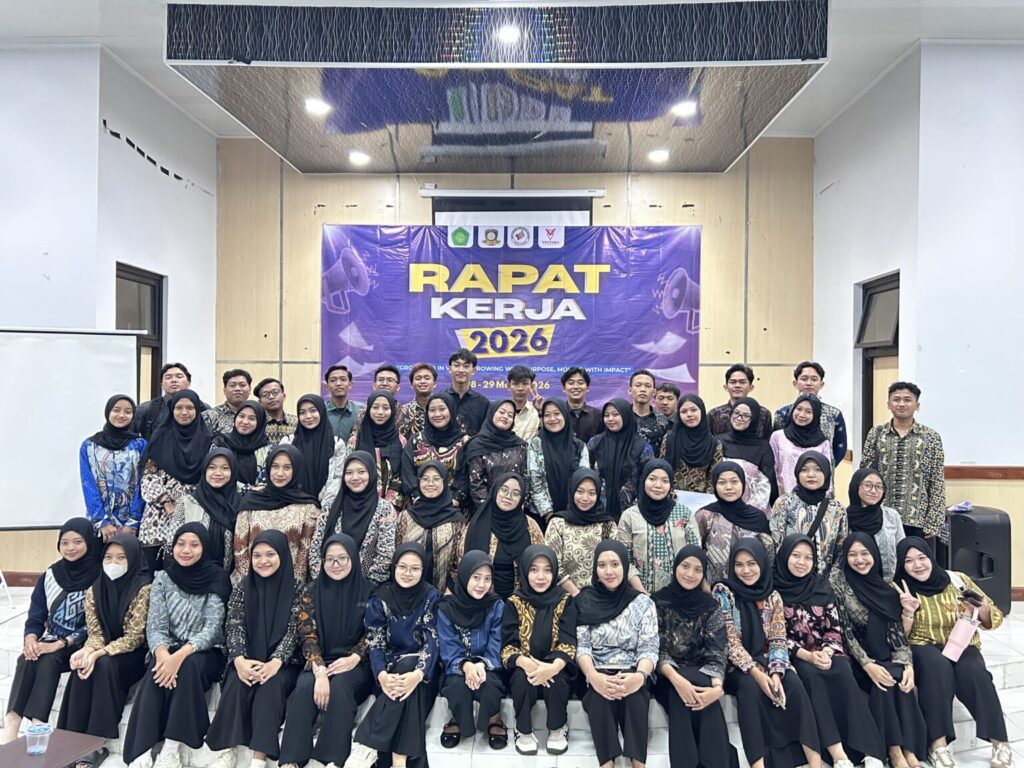
FST UIN Maliki Malang – (03/30/2026) Active, accountable, and impactful student organizations are increasingly needed in the context of results-oriented higher education. Given the importance of measurable evaluation and contributions to student and institutional development, working meetings (raker) have become an important instrument to ensure every student organization operates with a clear and relevant direction. In response to this, the Biology Study Program Student Association (HMPS) “Semut Merah” of UIN Maulana Malik Ibrahim Malang held a Working Meeting on March 28–29, 2026, in the D Building Hall.
This activity involves 60 Biology Student Association board members divided into various divisions, such as Education, Student Media, Human Resource Development, Organization, Information and Communication, Entrepreneurship, and Religious Affairs. This forum is designed as a consolidation space for each division to present and test their work program designs through plenary session mechanisms and commission discussions. This approach provides room for all board members to contribute input and critique the work programs that are drafted to align with the needs of the organization and students more broadly.
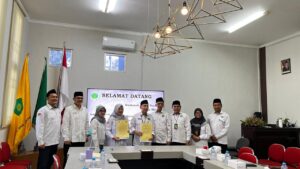
 On the second day, the work programs presented by the Communication and Information, Entrepreneurship, and Religious Affairs divisions received further input before finally being ratified in the forum. The signing of the MoU by all officers symbolized a shared commitment to implementing the forum's decisions in a measurable and systematic manner. The Chair of the Biology Student Association, Chumairo Al Muyassaroh, stated, “Through this work meeting, we hope to start our term well and refine our work programs to be more effective than the previous period.”
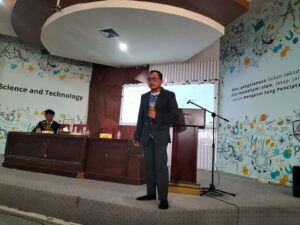
The Head of Student Affairs Center at UIN Maulana Malik Ibrahim Malang emphasized the importance of the work meeting as a starting point for building a strong organizational system. “The work meeting is not just a forum for approving programs, but also an arena for students to learn to design, manage, and be accountable for organizational policies professionally,” he said.
This working meeting of the Biology Student Association “Semut Merah” is proof that student organizations are now moving towards a system and performance-based work model. Moving forward, the challenge lies in the consistency of program implementation and the ability to conduct evaluation based on measurable achievements. If this practice continues to be developed, student organizations will not only become implementers of activities but also strategic learning spaces capable of producing adaptive, responsible leadership that is relevant to future demands. (Info Saintek)