EN
EN  ID
ID  AR
AR  ZH
ZH 
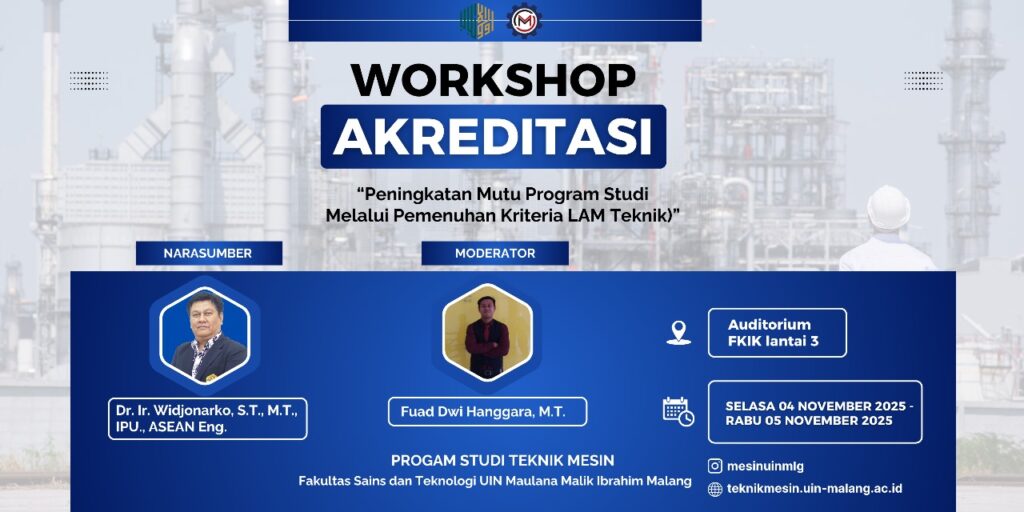
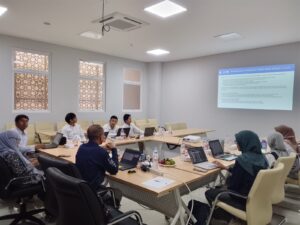
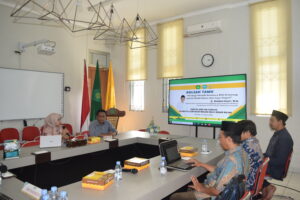
FST UIN Maliki Malang - (05/11/2025) The Mechanical Engineering Study Program closed a series of Accreditation Workshops with the theme of “Improving the Quality of Study Programs Through Fulfilling Engineering LAM Criteria” which took place at the FKIK Auditorium on the 3rd floor from November 4 to 5, 2025. The activity presented Dr. Ir. Widjonarko, S.T., M.T., IPU., ASEAN Eng. as the resource person and Fuad Dwi Hanggara, M.T. as the moderator.
For two days, the speakers systematically reviewed the points of LAM Teknik criteria, interpretation of indicators, and strategies for fulfilling credible evidence. Participants were invited to link tridharma performance data with SLOs, map course contributions to outcomes, and compile consistent quality arguments in core documents ranging from updating LKPS to strengthening LED to be more data-based, analytical, and in line with the latest policies.
The workshop format is designed to be practical: exposure to the framework, followed by a document clinic. Lecturers simulate the preparation of criteria items, conduct self-assessment, and receive directed feedback on aspects of quality assurance, tracer study & user satisfaction, learning outcomes, MBKM, applied research, service, to governance and industrial partnerships. As a result, participants produced a standardized template, matrix of criteria fulfillment, improvement timeline, and determination of PIC for each indicator.
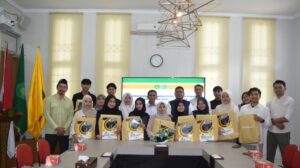
The workshop has officially ended today and went smoothly. The attendance of all Mechanical Engineering lecturers was accompanied by high enthusiasm as seen from the intensity of questions and answers and commitment to follow up on improvement notes. As a follow-up, the study program is preparing a digital evidence bank, an internal quality audit schedule, and the next mentoring session for finalizing LKPS-LED and simulating field assessments.
This series of activities emphasizes the commitment of Mechanical Engineering FST UIN Malang to build a culture of sustainable quality, strengthen readiness towards Excellent Accreditation, and improve graduate competitiveness through transparent, measurable, and impactful academic governance. (Niz)