EN
EN  ID
ID  AR
AR  ZH
ZH 
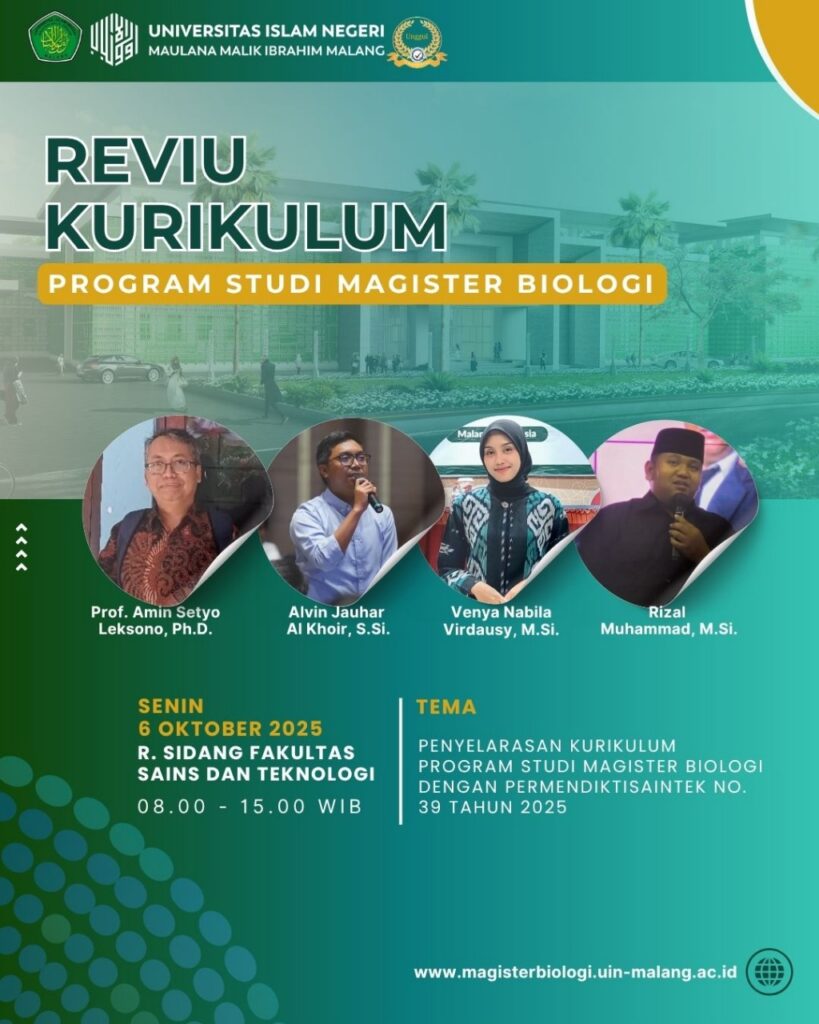
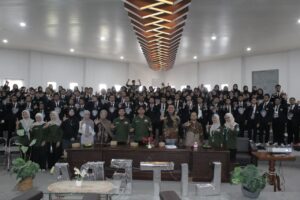
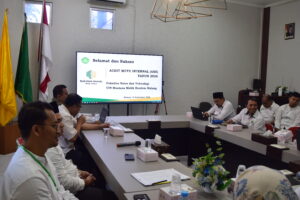
FST UIN Maliki Malang (06/10/2025) - The Faculty of Science and Technology of UIN Maulana Malik Ibrahim Malang on Monday, October 6, 2025, held a series of Curriculum Review for Master (S2) Biology which was packaged in two continuous sessions to strengthen the scientific characteristics of the study program while ensuring the relevance of graduate competencies to academic and industrial needs. The first session was held offline by presenting a Professor of Brawijaya University, Prof. Amin Setyo Leksono, Ph.D., while the second session took place in a hybrid manner by involving industry partners and alumni as strategic partners for curriculum enrichment.
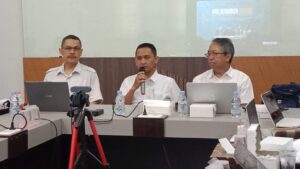 The activity was officially opened by the Dean of the Faculty of Science and Technology, Dr. Agus Mulyono, M.Kes., who emphasized that curriculum development must be based on the four pillars of UIN Maulana Malik Ibrahim Malang's character, spiritual depth, moral majesty, breadth of knowledge, and spiritual maturity. These pillars become the foundation for the birth of graduates who excel academically, have character, and are able to make a real contribution to society. The review was attended by lecturers, Master of Biology students, and stakeholder representatives, with active participation of all participants to ensure that the curriculum is more contextual and applicable.
In the presentation of Session 1, Prof. Amin conveyed a number of key inputs. He encouraged the sharpening of the Prodi's scientific vision to highlight the uniqueness of Biology at UIN Malang which integrates Islamic values, conservation, and environmental sustainability. The profile of graduates is considered necessary to be aligned with the actual needs of users through validation of tracer studies and stakeholder feedback. Competency relevance is also emphasized so that it is always connected to the latest developments in science and technology, for example in the field of omics so that graduates remain competitive at the national and international levels. In addition, the alignment of courses with Graduate Learning Outcomes (GLOs) needs to be reviewed, and the need for a balance of theory, practicum, research, seminars, and scientific publications is emphasized so that students' academic abilities and research skills grow in harmony.
In Session 2, the forum presented perspectives across the education ecosystem. Acting as moderator Fitria Nungky Harjanti, the activity presented Alvin Jauhar Al Khoir (industrial partner) as well as Master of Biology alumni Venya Nabila and Rizal Muhammad. Alvin emphasized the importance of project-based learning, guest lectures, and internships to bridge theory-practice, as well as strengthening hard skills (for example microbial analysis techniques for the pharmaceutical and food industries) and soft skills so that graduates are ready to compete. He emphasized research literacy as a key requirement for R&D departments, and mentioned academic track record and certification as strategic added values. In terms of alumni, Rizal encouraged the strengthening of competency certification and the development of industry-oriented Clinical Practice Oriented Training (CPOT) (e.g. phytochemical analysis, halal analysis). Venya added the importance of data analysis and AI utilization, research project-based learning, and scientific communication training (poster and conference presentation simulation). She also emphasized the strengthening of alumni networks and positive personal branding to increase the competitiveness of graduates at the national and international levels.
The Head of the Master of Biology Study Program, Dr. Dwi Suheriyanto, MP, emphasized that the review is a strategic step to continue to improve academic quality. "Through this review activity, we hope that the Master of Biology Study Program will be increasingly able to adapt to the dynamics of industrial and academic needs. Input from industry partners and alumni is an important provision to strengthen graduate competencies, both in terms of soft skills, hard skills, and research literacy. Moreover, currently UIN Maulana Malik Ibrahim Malang has a Professional Certification Agency (LSP), so the opportunity to present a curriculum that is integrated with competency certification is increasingly wide open. This is an added value for students to be more prepared and confident in entering the professional world," he said.
This series of reviews is expected to produce a Master of Biology curriculum that is adaptive, relevant, and characterized, and in line with the demands of science and technology and the needs of graduate users. The activity on October 6, 2025 is also the first step towards the preparation of a new curriculum that will continue to be refined in subsequent sessions with experts, stakeholders, and strategic partners, in order to produce graduates who are superior, competitive, and contribute to the development of biological science and its benefits to society. (Niz)